DTPA | Deceptive Trade Practices Act | consumer law | interest of consumers | common law fraud |
statutory fraud | deception | nondisclosure | misrepresentation | exemplary damages | laundry list |

Buggelli v. Feltis (Tex.App. - Houston [14th Dist.] Aug. 28, 2008)(Guzman)
(DTPA, challenge to judgment on settlement agreement, waiver of error)
AFFIRMED: Opinion by Justice Guzman  
Before Justices Frost, Seymore and Guzman
14-07-00027-CV        James Buggelli v. Alan J. Feltis and Roy J. Crosby d/b/a Royal Aero
Appeal from 269th District Court of Harris County
Trial Court
Judge: John Woolridge

Heckel v. Allen Samuels Chevrolet and GE (Tex.App.- Houston [14th Dist.] Aug. 28, 2008)(Guzman)
(product liability claim time-barred, warranty claim remanded)
AFFIRMED IN PART; REVERSED & REMANDED IN PART: Opinion by Justice Guzman  
Before Justices Brock Yates, Guzman and Brown
14-07-00254-CV        Sharon Heckel v. Allen Samuels Chevrolet and General Motors Corporation--
Appeal from 333rd District Court of Harris County
Trial Court Judge: Joseph J. Halbach

No detrimental reliance on misrepresentation shown - summary judgment for defendant
affirmed Wood v. Texas Chiropractic College (Tex.App.- Houston [1st Dist.] July 24, 2008)
(Jennings) (suit by student against private educational institution, DTPA, negligent
misrepresentation, reliance element, no-evidence summary judgment for defendant affirmed)
AFFIRM TC JUDGMENT: Opinion by
Justice Jennings
Before Justices Taft and Jennings, The Honorable Hudson
01-07-00952-CV Kelly Wood v. Texas Chiropractic College
Appeal from 190th District Court of Harris County
Trial Court
Judge: Hon. Jennifer Walker Elrod  

Jack v. Holiday World of Houston (Tex.App.- Houston [1st Dist.] June 19, 2008)(Taft) (DTPA, motor
home purchase, mistrial, improper comments in presence of jury, Batson challenge)
AFFIRM TC JUDGMENT: Opinion by Justice Taft  
Before Justices Taft, Keyes and Alcala
01-06-00816-CV Herbert L. Jack v. Holiday World of Houston, Forest River, Inc., Bank of America, N.
A. | Appeal from 281st District Court of Harris County
Trial Court
Judge: Hon. David J. Bernal

Texas Supreme Court dismisses consumer class action complaining of unsafe safety
belts; says plaintiffs have no standing to sue even individually because they have not
been injured (yet)
Daimler Chrysler Corp. v. Inman, No. 03-1189 (Tex. Feb. 1, 2008)(Opinion by Justice Nathan Hecht)
(class action dismissed on standing grounds, jurisdictional dismissal, DWOJ)

Texas Supreme Court decertifies class in consumers' class action against Best Buy
Best Buy Co. v. Barrera, No. 07-0028 (Tex. Nov. 30, 2007)(per curiam)(consumer law, class actions,
class de-certified, class certification)
BEST BUY CO. AND BEST BUY STORES, L.P. v. VELMA V. BARRERA, INDIVIDUALLY AND ON
BEHALF OF OTHERS SIMILARLY SITUATED; from Nueces County; 13th district (
13-05-00258-CV,
214 S.W.3d 66, 11/30/06)

Mott v. Red's Safe and Lock Services, Inc. (Tex.App.- Houston [1st Dist.] Dec. 20, 2007)(Hanks)
(DTPA, products liability, warranty breach)
REVERSE TC JUDGMENT AND REMAND CASE TO TC FOR FURTHER PROCEEDINGS: Opinion by
Justice Hanks
01-06-00823-CV Larry Gene Mott and Cheryl Ann Mott v. Red's Safe and Lock Services, Inc. d/b/a
Red's Hardware and Security, and Red's True Value Hardware
Appeal from 151st District Court of Harris County (
Judge Caroline Baker)

Ritchie v. Dr. Yazdi, Apple Dentists, PLLC (Tex.App.- Houston [14th Dist.] May 22, 2007)(Yates)
(HCLC)(dentist
malpractice, negligence, no DTPA against physician, interest on judgment)
AFFIRMED AS MODIFIED: Opinion by Justice Brock Yates
14-05-01232-CV Lycett Ritchie v. Dr. Neshat Yazdi, Apple Dentists, PLLC & Dr. Fatemah Bijan
Appeal from 281st District Court of Harris County (Judge
David J. Bernal)

The Landing Council of Co-Owners v. Durham (Tex.App.- Houston [14th Dist.] Nov. 20, 2007)
(Seymore)(
DTPA, jury, exemplary damages award deleted)
AFFIRMED AS MODIFIED: Opinion by Justice Seymore
14-06-00417-CV The Landing Council of Co-Owners v. James B. Durham and Mary Lou Durham
Appeal from Co Civil Ct at Law No 2 of Harris County (
Judge Gary Michael Block)

Loewe v. Trammell Crow Co. (Tex.App.- Houston [14th Dist.] Nov. 15, 2007)(Edelman)
(
commercial lease, shopping center, professional services exception bars recovery under DTPA,
summary judgment for defendants affirmed)

Cole v. Cassel (Tex.App.- Houston [1st Dist.] Nov. 1, 2007)(Alcala)(DTPA, real estate litigation,
earnest money)
AFFIRM TC JUDGMENT: Opinion by Justice Alcala
01-06-00304-CV Curtis S. Cole v. Craig Cassel, Brenda Cassel, Marcia Clark, Preston Jullian
Appeal from 281st District Court of Harris County (
Hon. David J. Bernal)
Appellant, Curtis Cole, appeals a take-nothing summary judgment rendered in favor of Craig Cassel, appellee, in
Cole’s suit for deceptive trade practices, breach of contract, common law fraud, real estate fraud, negligent
misrepresentation, and detrimental reliance resulting from a failed real estate contract. Cole does not frame any of
his challenges as issues or points of error, but rather describes his assertions in paragraph form, without
enumeration.
We conclude that the trial court properly rendered summary judgment in favor of Cassel on Cole’s deceptive trade
practices claim and that Cole waived his other challenges due to inadequate briefing. We affirm the judgment of the
trial court.

Zarzana v. Ashley (Tex.App.- Houston [14th Dist.] Jan. 23, 2007)(Yates)
(DTPA, counterfeit inspection sticker, fraud, negligent supervision)
AFFIRMED: Opinion by Justice Brock Yates
Before Chief Justice Hedges, Justices Brock Yates and Seymore
14-06-00100-CV        Sam Zarzana v. Donald Ashley and Charles Ashley d/b/a Meineke Car Care
#10--Appeal from 190th District Court of Harris County (Hon. Jennifer Elrod Walker)

Tejas Toyota, Inc. v. Coffman (Tex.App.- Houston [1st Dist.] May 3, 2007)(Nuchia)
[consumer law, DTPA, auto service, oil change,
attorneys fees]

Appellant, Tejas Toyota, Inc. (Tejas), appeals the trial court's judgment awarding actual damages and attorney's fees
to appellee Lisa Coffman in her lawsuit against Tejas for negligence, breach of warranty, and violation of the
Deceptive Trades Practices-Consumer Protection Act (DTPA) (1) in connection with damages allegedly resulting
from an oil change. In five issues, Tejas complains that (1) the trial court erred in excluding evidence of the prior
condition of the automobile, (2) the evidence was factually insufficient to support an implied finding that the oil
change was the producing or proximate cause of the damages, (3) the evidence was factually insufficient to support
the amount of the damages award, (4) the trial court erred in finding that the amount of attorney's fees was
reasonable and necessary, and (5) the evidence was factually insufficient to support the amount of the attorney's
fees awarded. We affirm.

We conclude that the evidence was factually sufficient to support the trial court's finding that the fees awarded were
reasonable and necessary and in awarding $21,000 in attorney's fees for the trial, plus additional fees contingent on
appeal. Accordingly, we overrule Tejas's fourth and fifth issues.

Tello v. Bank One, NA , 218 S.W.3d 109 (Tex.App.- Houston [14th Dist.] Jan. 9, 2007)(Seymore)
(auto lease,
DTPA) [vehicle lease, breach of contract, fraud, DTPA]
AFFIRMED: Opinion by Justice Seymore
(Before Justices Hudson, Frost and Seymore)
14-04-00888-CV        Pablo Tello v. Bank One, N.A.: Banc One Texas Leasing Corp
Appeal from Co Civil Ct at Law No 2 of Harris County  (
Judge Gary Michael Block)
Dissenting Opinion by Justice Frost


-----

NO. 01-06-00347-CV

--------------------------------------------------------------------------------


TEJAS TOYOTA, INC., Appellant

V.

LISA COFFMAN, Appellee

--------------------------------------------------------------------------------


On Appeal from the 151st District Court

Harris County, Texas

Trial Court Cause No. 2002-17199

--------------------------------------------------------------------------------

MEMORANDUM OPINION

Appellant, Tejas Toyota, Inc. (Tejas), appeals the trial court's judgment awarding actual damages and attorney's fees
to appellee Lisa Coffman in her lawsuit against Tejas for negligence, breach of warranty, and violation of the
Deceptive Trades Practices-Consumer Protection Act (DTPA) (1) in connection with damages allegedly resulting
from an oil change. In five issues, Tejas complains that (1) the trial court erred in excluding evidence of the prior
condition of the automobile, (2) the evidence was factually insufficient to support an implied finding that the oil
change was the producing or proximate cause of the damages, (3) the evidence was factually insufficient to support
the amount of the damages award, (4) the trial court erred in finding that the amount of attorney's fees was
reasonable and necessary, and (5) the evidence was factually insufficient to support the amount of the attorney's
fees awarded. We affirm.

BACKGROUND

On December 20, 2000, Coffman took her 1996 Toyota Camry to Tejas's service department for a routine oil change.
Duc Luong, a mechanic with Tejas, testified by deposition that he changed the oil and did a tune-up on Coffman's
car and that, when she drove away, her motor was in good condition. After the oil change, she drove home, but when
she got there, she saw that smoke was coming from under the hood. She called Tejas and was told that the smoke
was caused by oil that had spilled on the engine. The next day she drove to Hockley, Texas for a job interview. As she
arrived in Hockley, she noticed that the car's oil light was flickering. She called Tejas again to report the problem and
was told to bring the car to the shop. She was also told that the car had oil in the engine as long as the light flickered,
but that, if it came on and stayed on, she should call and the dealership would send a tow truck to bring the car to the
shop. As she proceeded directly to Tejas, which was in Humble, Texas, the oil light came on and stayed on. She
called Tejas, and it sent the tow truck. Tejas refused to lend Coffman a car, and she missed her job interview.

Mike Davidson, a team leader at Tejas, told Coffman that the problem had been caused by a dipstick that had not
been returned to the engine after the oil change. Don Waters, the service manager, said that a gasket or seal had
not been put on. Tejas replaced the gasket and the dip stick, and Coffman drove the car home. However, after that
time, Coffman had to put oil in her engine about twice a week, and the car smelled strongly of burnt oil. The engine
was also noisy and eventually began making a noise that Coffman described as "like a lawnmower." She
complained to Tejas, both by telephone and in writing, to no avail. She stopped driving the car in May 2001, and in
June 2001 she took the car to another Toyota dealer, who replaced the engine and performed some other
maintenance. Work on the car was completed by November, but, because Coffman did not have the money to pay for
the work, the dealer agreed to keep it on the premises for a time. Coffman paid the dealer and retrieved her car in
February 2002. Coffman then filed this law suit.

The case was tried to the court, which rendered judgment in Coffman's favor and made findings of fact and
conclusions of law.

DISCUSSION

Standard of Review

We review a trial court's evidentiary rulings for abuse of discretion. Interstate Northborough P'ship v. State, 66 S.W.3d
213, 220 (Tex. 2001). To obtain a reversal, an appellant must show that a trial court's error in admitting or excluding
evidence probably resulted in an improper judgment. Id. Generally, to prevail, an appellant must show that the
judgment turned on the evidence that was excluded or admitted. Id. Error in admitting or excluding evidence is not
usually reversible if the evidence is cumulative. Id.

When appealing a judgment after a bench trial, the appellant must challenge the sufficiency of the evidence to
support the trial court's findings or the findings are binding on the appellate court. IKB Indus. (Nigeria) Ltd. v. Pro-
Line Corp., 938 S.W.2d 440, 445 (Tex. 1997). If the appellant challenges the findings, the appellate court will review
the sufficiency of the evidence to support the findings in the same manner it reviews a jury's findings in a jury trial.
Escobar v. Escobar, 728 S.W.2d 474, 475 (Tex. App.--San Antonio 1987, no writ); State Bar v. Roberts, 723 S.W.2d
233, 235 (Tex. App.--Houston [1st Dist.] 1986, no writ). In reviewing the factual sufficiency of the evidence, the court
must consider all evidence in the record, both in support of, and contrary to, the finding. Lofton v. Texas Brine Corp.,
720 S.W.2d 804, 805 (Tex. 1986).

Tejas does not challenge the following findings of fact. Thus, they are binding on this court.

1. On or about December 20, 2000, Plaintiff took her car to Defendant for an oil change.

. . . .


3. The oil change was improperly performed.


4. Following the oil change, the engine smoked, the car had to be returned to Defendant by wrecker, and
subsequently required engine replacement.


5. Defendant made representations to Plaintiff concerning the repair and subsequent damage cause to her car
following its return by wrecker.


6. Defendant refused to assist Plaintiff with replacement or cost of replacement when the car subsequently failed
and demand was made upon it.


7. Defendant engaged in an unconscionable course of action toward Plaintiff.


Exclusion of Evidence

In its first issue, Tejas contends that the trial court erred in excluding Defendant's Exhibit 3 (DX-3), which, according
to Tejas, was evidence of repairs the car needed as of April 2000. Tejas complains generally about the exclusion of
other documents, but no other exhibits are specifically identified as erroneously excluded. Tejas asserts that DX-3
showed that needed repairs included oil pan and rear main seal oil leaks.

At trial, when Tejas offered DX-3, Coffman objected. Coffman also objected to Defendant's Exhibit 9 (DX-9), an
estimate by a Tejas service representative of repairs needed to Coffman's car on December 20, 2000 when she
brought the car in for an oil change. After examining both exhibits, the trial court sustained the objection to DX-3, but
admitted DX-9. DX-3 is not in the appellate record.

To show error by a trial court's exclusion of evidence, the substance of the evidence must be made known to the trial
court by an offer of proof or must be apparent from the context of the offer. Tex. R. Evid. 103(a)(2). The primary
purpose of the offer of proof is to enable the reviewing court to determine whether the exclusion was erroneous and,
if so, whether it was harmful. Fletcher v. Minn. Mining & Mfg. Co., 57 S.W.3d 602, 608 (Tex. App.--Houston [1st Dist.]
2001, pet. denied). Therefore, an effective offer of proof must be specific enough that the reviewing court can
determine admissibility and harm. Coleman v. Coleman, 170 S.W.3d 231, 239 (Tex. App.--Dallas 2005, pet. denied).

In this case, the trial court did not exclude all evidence of the prior condition of Coffman's car. The court stated that it
would exclude documents related to the condition of the car prior to December 2000, but that the document related to
the condition of the car at the time it was brought to Tejas was relevant. That document, DX-9, was admitted into
evidence. Because it is not in the appellate record, we have no way of reviewing DX-3. Therefore, we cannot say that
the trial court abused its discretion in excluding that document. Accordingly, we overrule Tejas's first issue.

Implied Finding of Producing Cause

In its second issue, Tejas contends that the evidence was factually insufficient to support an implied finding that the
oil change was the producing or proximate cause of Coffman's damages. Tejas quotes a portion of rule 299 of the
Texas Rules of Civil Procedure, which provides in pertinent part:

The judgment may not be supported upon appeal by a presumed finding upon any ground of recovery or defense, no
element of which has been included in the findings of fact; but when one or more elements thereof have been found
by the trial court, omitted unrequested elements, when supported by evidence, will be supplied by presumption in
support of the judgment.

Tex. R. Civ. P. 299. Tejas concedes that the trial court found one or more elements of a negligence cause of action
and at least one element of a DTPA cause of action. It therefore follows that we may presume a finding of proximate
or producing cause if such a finding is supported by the evidence. Tejas argues that there is no evidence to support
such a presumed finding.

No election of remedies appears in the record. Both parties discuss the presumed-finding issue as it relates to
negligence and DTPA. However, Coffman requested attorney's fees in connection with her DTPA cause of action,
and the trial court awarded them. Therefore, we presume that the trial court's award of actual damages was under
Coffman's DTPA cause of action.

The elements of a DTPA cause of action are (1) the plaintiff is a consumer; (2) the defendant engaged in false,
misleading, or deceptive acts, breached an express or implied warranty, or engaged in an unconscionable action or
course of action; and (3) these acts constituted a producing cause of the consumer's damages. See Tex. Bus. &
Com. Code Ann. § 17.50(a) (Vernon Supp. 2006); see also Doe v. Boys Clubs, 907 S.W.2d 472, 478 (Tex. 1995)
(stating elements of DTPA cause of action with regard to false, misleading, or deceptive acts or practices). In her
petition under causes of action for violation of the DTPA, Coffman alleged breach of express and implied warranties,
misrepresentations regarding the quality of Tejas's work, and unconscionable conduct. The trial court's finding of
fact number 1 established Coffman's status as a consumer. Finding numbers 3 and 4 support Coffman's claim that
Tejas breached its implied warranty to make repairs in a good and workmanlike manner. Finding number 5
supported Coffman's allegation that Tejas misrepresented the quality of its work. Because Tejas did not challenge
these four findings, they are binding on this Court as evidence to support two elements of Coffman's DTPA cause of
action. We must determine whether there is any evidence to support a presumed finding that any act by Tejas was a
producing cause of Coffman's damages. "Producing cause requires that the act be both a cause-in-fact and a
'substantial factor' in causing the damages." Carousel's Creamery, L.L.C. v. Marble Slab Creamery, Inc., 134 S.W.3d
385, 399 (Tex. App.--Houston [1st Dist.] 2004, pet. dism. by agr.).

Tejas challenges finding of fact number 2, which states,"The car was in good condition at the time it was presented
to Defendant." Tejas argues that Coffman had complained previously about smoke coming from the car and that
Coffman would not permit Tejas to make repairs it recommended when she brought the car to it for the oil change.
Tejas contends that this evidence negated a presumed finding that the oil change caused Coffman's damages.

Coffman controverted Tejas's testimony by stating that she had previously complained about smoke coming from
the tailpipe, not from the engine. She also testified that Waters had told her that a seal had been left off and they
were going to replace it. Luong, Tejas's mechanic, testified that the only work he did on Coffman's car was the oil
change and a tune-up and that the motor was in good condition when she drove away from the dealership.

The trial court, as fact finder, was free to believe or disbelieve any witnesses' testimony in whole or in part. Miller v.
Kendall, 804 S.W.2d 933, 939 (Tex. App.--Houston [1st Dist.] 1990, no writ). We hold that the testimony of Coffman
and Luong was sufficient to support the trial court's finding that the car was in good condition when it was presented
to Tejas. Therefore, Tejas's evidence of Coffman's previous complaint regarding smoke from the car did not negate
a presumed finding of producing cause.

Bernard Toomey, president of Tejas, testified that Coffman's car was not in immediate danger when it was brought
to the shop for the oil change and that it was not in danger from not having the recommended repairs done. He
further testified that if there had been anything that could have caused a problem the next day, they would have told
Coffman.

Davidson testified that he checked the car after it was towed to the shop and found that the dip stick was missing
and the oil was low. He also found oil on the engine. He stated that he replaced the dip stick, added oil, and cleaned
the engine with a degreaser. However, a letter from Tejas's attorney to Coffman's attorney, Plaintiff's Exhibit 6, stated
that "no problem was detected upon replacing the gasket which allowed oil to leak after servicing Ms. Coffman's
automobile." This letter corroborated Coffman's testimony that Waters had told her that a seal had been left off and
they were going to replace it.

We hold that Coffman's testimony regarding the missing seal, Davidson's and Luong's testimony regarding the
condition of the car, and the admission in Plaintiff's Exhibit 6 are evidence supporting a presumed finding that
Tejas's work on Coffman's car and the misrepresentations regarding that work were the producing cause of
Coffman's damages. Accordingly, we overrule Tejas's second issue.

Economic Damages

In its third issue, Tejas contends that there is factually insufficient evidence to support the amount of the economic
damages awarded. Tejas challenges finding of fact number eight, which provides:

8. The cost of a new engine was $2,579.80, which Plaintiff had to save, and therefore she was without a car for 40
weeks. The reasonable cost for renting a comparable vehicle in Houston is $120.00 per week, or $4,800.00 for the
period of loss of use.

The judgment awarded Coffman $7,379.80 in economic damages. Tejas argues that Coffman's car was in the shop
for 268 days, or 38.28 weeks, and, therefore, she should receive $4,594.29 for loss of use of her car rather than
$4,800. However, Coffman testified that she stopped driving her car approximately one month before taking it to a
dealer to replace the engine. The trial court could have considered some of this time in finding that Coffman lost the
use of her car for 40 weeks. We conclude that the evidence was sufficient to support finding of fact number eight. We
overrule Tejas's third issue.

Attorney's Fees

In its fourth issue, Tejas contends that the trial court erred in finding that the amount of attorney's fees awarded was
reasonable and necessary. In its fifth issue, Tejas asserts that the evidence was factually insufficient to support the
amount of the award. Tejas challenges finding of fact number 9, which provides:

9. A reasonable and necessary fee for the work performed by Plaintiff's attorney through the trial of this case is
$21,000.00; work in the event of an appeal to the Court of Appeals, $6,000.00; and in the event of an appeal to the
Supreme Court of Texas, $3,000.00.

Tejas complains that Coffman's attorney, the only witness regarding attorney's fees, was an interested party.

The trial court awarded $30,000 in attorney's fees, which included appellate fees, and provided that, if the judgment
were not appealed, the judgment would be "credited with $9,000, leaving a recovery of $21,000.00," and if the
judgment were appealed to the court of appeals, but not the supreme court, the judgment would be "credited with
$3,000.00, leaving a recovery of attorney's fees in the amount of $27,000.00." Tejas argues that this recovery is more
than 300% of the economic damages recovered and would be unconscionable if paid by the client.

To recover attorney's fees under the DTPA, a plaintiff must prove that the fees were reasonable and necessary.
Arthur Andersen & Co. v. Perry Equip. Corp., 945 S.W.2d 812, 819 (Tex. 1997). The determination of reasonable and
necessary attorney's fees is a question for the trier of fact. See id. (stating that jury must decide question of attorney's
fees). In this case, the trial court was the finder of fact; we review the trial court's findings regarding attorney's fees for
factual sufficiency. See Checker Bag Co. v. Washington, 27 S.W.3d 625, 640 (Tex. app.--Waco 2000, pet. denied)
(reviewing attorney's fees for sufficiency of the evidence).

Coffman's attorney's time records for the case were admitted into evidence. Counsel testified regarding the time and
labor involved in the case; her hourly fee of $200, which, she said, was lower than similarly qualified attorneys and
was a contingent-hourly fee; and her experience, reputation, and ability as a board certified consumer lawyer. She
further testified that, in her opinion, her fee was reasonable and necessary. Tejas's attorney cross-examined
Coffman's attorney and questioned her about the fact that she prepared for each setting in the case, even though
there were some resets. Although some of his questions implied that not all of the preparation was necessary, he
did not present any evidence to contradict her testimony.

When the testimony of an interested witness is not controverted, and the testimony is clear, direct, positive, and free
from contradiction and inaccuracy, it is generally taken as true, as a matter of law. Van Waters & Rogers, Inc. v.
Quality Freezers, Inc., 873 S.W.2d 460, 464 (Tex. App.--Beaumont 1994, writ denied). In a DTPA case, the ratio
between the actual damages awarded and the attorney's fees is not a factor that determines the reasonableness of
the fees. See, e.g., Seabury Homes, Inc. v. Burleson, 688 S.W.2d 712, 716 (Tex. App.--Fort Worth 1985, no writ)
(affirming award of $15,000 in attorney's fees and award of $2,000 in damages, trebled to $6,000); Jack Roach Ford
v. De Urdanavia, 659 S.W.2d 725, 730 (Tex. App.--Houston [14th Dist.] 1983, no writ) (suggesting remittiture of
$8,500 of attorney's fee award of $28,500, resulting in attorney's fee award of $20,000, and award of $500 in actual
damages).

We conclude that the evidence was factually sufficient to support the trial court's finding that the fees awarded were
reasonable and necessary and in awarding $21,000 in attorney's fees for the trial, plus additional fees contingent on
appeal. Accordingly, we overrule Tejas's fourth and fifth issues.

CONCLUSION

We affirm the judgment.

Sam Nuchia

Justice

Panel consists of Justices Nuchia, Keyes, and Higley.

1. Tex. Bus. & Com. Code Ann. §§ 17.41-17.63 (Vernon 2002 & Supp. 2006).

======
DTPA and Other Consumer Case Law from Courts of Appeals
(Tex.App.- Houston 2007-2008)
Houston Opinions
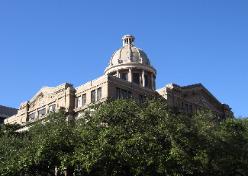
Old Harris County Civil Courthouse
Practice Areas
and Legal Topics
Houston Case Law
ADR in Family Court
Amicus & Ad Litem
Attorney's Fees
Animal Law Cases
Arbitration Case Law
Attorney Fee Litigation
Auto Accident Cases
Bill of Review Cases
Car Wreck Litigation
Child Support Cases
City of Houston Cases
Consumer Case Law
Condemnation Suits
Construction Law
Contractors
Contempt of Court
CPS Termination Suits
Credit Card Suits
Default Judgments
Discovery Disputes
Divorce Suits & SAPCR
Division of Property
Election Law Litigation
Eminent Domain Cases
Employment Law
Ethics and Recusal
Expunction Cases
Family Law Cases
Family Mediation ADR
Firefighter Litigation
Foreclosure Law
Foreign Judgments
Government Entities
Grandparent Rights
Health Care Coverage
Healthcare Liability
Homeowner Law
Insurance Litigation
International Family Law
Juvenile Cases
Labor and Employment
Breach of Lease Cases
Landlord-Tenant Disputes
Medical Malpractice
Modification SAPCR Suits
Official Immunity Cases
Paternity Suits
Premises Liability
Probate Court Cases
Property Tax Appeals
Public Employment
Real Estate Litigation
Restaurant Litigation
Restricted Appeal
Sanctions Case Law
SAPCR Modification
School Law Cases
School Districts
Slip and Fall Suits
Sovereign Immunity
Temporary Injunctions
Texas Tort Claims Act
Worklpace Safety Injury
Venue Challenges
HOUSTON CASE LAW BLOG
AUSTIN CASE LAW BLOG